Filter context in Super Filter allows seamless cross-visual filtering within the Inforiver suite without writing DAX. Simply enabling context settings connects visuals dynamically for smarter, context-aware dashboards.
How to Configure Filter Context in Super Filter
To enable filter context recognition across Inforiver visuals, follow these simple steps:
1
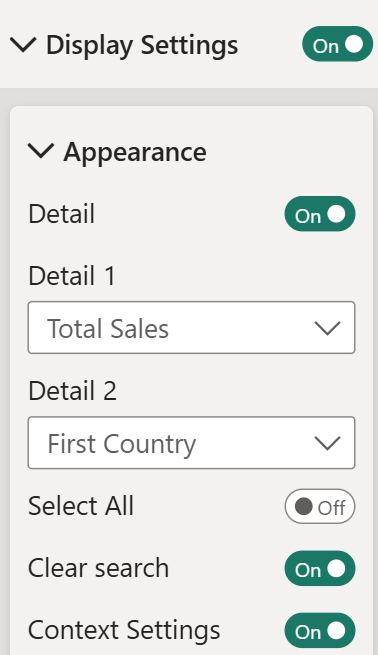
Click on the Super Filter visual and open the Display Settings pane. Enable Context Settings
Image 1: Context Settings options in Display Settings
2
Scroll down and locate the Context Settings section and toggle it ON.
Image 2: Context Settings enabled in Format pane
3
Go the Specific Inforiver visuals Filter context settings and select the Super Filter visual ID.
Image 3: Filter context settings in Inforiver Matrix
Image 4: Filter context settings in Inforiver Analytics+
4
Once the filter context is applied, users can filter with the Super Filter slicer and add comments, annotations, or perform actions in Analytics+, Inforiver Reporting Matrix, or Writeback Matrix. These will reflect based on the applied filter context
When using the Inforiver suite of visuals, you don’t need to create any DAX measures to configure filter context. Follow the steps mentioned above, and that's it! Inforiver handles the rest automatically, allowing visuals to communicate seamlessly and respond dynamically based on the active filter selections — all with just a few clicks.
Advantages of Using the Inforiver Visual Suite
When filter context is enabled across Inforiver visuals, you can: